Da Vinci advancing healthcare in Walla Walla
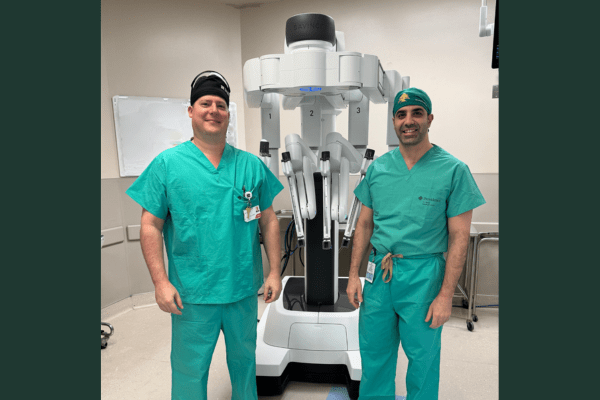
Providence St. Mary Medical Center’s recent technological step forward in surgery, acquiring the da Vinci Surgical System, is advancing healthcare in Walla Walla, both in benefits to surgical patients and the community’s ability to recruit new surgeons.
“A lot of the patients I have, they were not able to have their surgery here before we got this,” said Dr. Jason Sedarsky, a urologist with Providence Medical Group. “We were referring people out. We are doing surgeries now that we just were not able to do before, like prostatectomies.”
For many patients, traveling to other communities for surgery is both expensive and challenging — particularly for those who are elderly, have physical limitations, or face financial barriers. Winter weather can add additional complications.
All of the physicians performing surgeries with the da Vinci at Providence St. Mary are certified in its use and trained extensively with the equipment at other facilities, Dr. Sedarsky said.
“I think there may be a lack of understanding in the community that since it is new to St. Mary, it is new to us,” he said. “It’s not.”
The da Vinci robot functions as an extension of the surgeon’s hands, allowing highly precise, minimally invasive procedures using tiny instruments through small incisions. While it is not appropriate for every patient, for many a da Vinci procedure may translate to smaller scars, less bleeding, and less pain.
Traditional laparoscopic surgery — also minimally invasive — offers some of the same advantages, said Dr. Moustapha Dimachk, general surgeon with Providence Medical Group. But the da Vinci gives the surgeon a greater range of motion and improved visualization. In complex cases, that can determine whether a surgeon can continue minimally invasive techniques or must switch to an open procedure.
“A lot of surgeons would tell you that there is a higher chance they will continue with a minimally invasive procedure with the da Vinci when a procedure becomes difficult, as opposed to having to go with an open procedure,” said Dr. Dimachk, who has done more than 50 surgeries with the da Vinci at St. Mary in just the past few months.
“With the increased motion you have with da Vinci, you can address more," he said. "I recently had a very difficult surgery that was over three hours. Had I tried to do it with laparoscopy, I would have had to covert to an open surgery.”
At St. Mary, the da-Vinci system is used for a wide range of abdominal and urological surgeries, including gallbladder, colon, hernia, prostate, and some cancer procedures.
Both Dr. Sedarsky and Dr. Dimachk said that patients have asked them about da Vinci surgeries. Some are drawn to the potential benefits, while others worry the robot operates independently. It does not. The da-Vinci is a tool—every movement is controlled entirely by the surgeon.
The da Vinci cost $2.06 million, with more than $1 million donated by the community through the Providence St. Mary Foundation. It was a recognition of the importance of the technology to healthcare in Walla Walla.
“This was an investment from the community and from the Foundation,” Dr. Sedarsky said.
Dr. Dimachk agreed. “It’s not just a fancy tool that surgeons wanted,” he said. “It is an investment in the future, and in keeping up with advancements in the medical field.”
Because medical schools now train surgeons on robotic systems, new physicians expect to use this technology in their practice. Many will not consider joining a facility without it.
“The presence of a da-Vinci drives recruitment,” Dr. Dimachk said, underscoring the system’s importance to St. Mary’s ability to attract the next generation of surgeons.