Pioneering immunotherapy clinical trial enrolling patients with advanced cancers
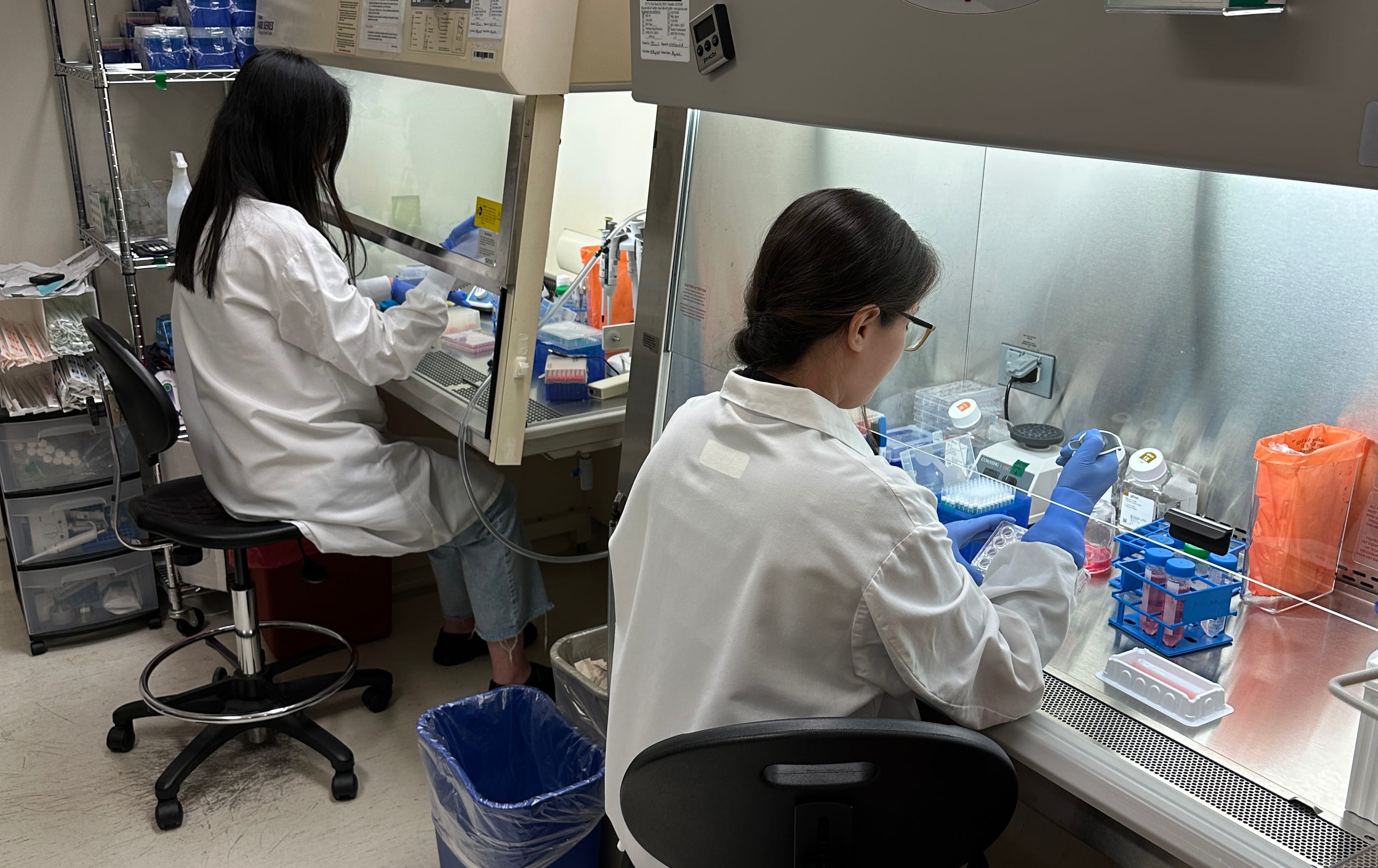
The first clinical trial evaluating M3T01 is enrolling patients at Providence Cancer Institute. M3T01 is being combined with pembrolizumab for patients with advanced cancers.
“This clinical trial explores a new dimension in immunotherapy through protecting T cells to allow them to infiltrate and attack tumors,” said Matthew Taylor, M.D., medical oncologist and researcher at Providence Cancer Institute.
Leading research on FasL-blocking medication
M3T01 was developed by Dr. Taylor and his research team at Earle A. Chiles Research Institute, the research arm of Providence Cancer Institute. The team spent three years exploring monoclonal antibodies, engineered proteins designed to block the Fas ligand (FasL) protein.
By masking FasL, M3T01 helps prevent T cells from being destroyed, allowing them to stay focused on attacking the tumor. So far, only one other FasL-blocking medication, APG101, has advanced to cancer clinical trials. However, in preclinical studies, MT301 was more than 300 times as potent as APG101.


Two parts determine further studies
There are two parts to the study. Part 1 is to evaluate the safety and maximum tolerated dose of M3T01 by itself and in combination with pembrolizumab, another immunotherapy. The outcome of Part 1 will determine the highest dose that can be given safely and the recommended dose in the next study phases.
Once the optimal dose of M3T01 is established by itself, the study moves to Part 2, where M3T01 will be tested in combination with standard cancer treatments for the following cancers:
- Newly diagnosed glioblastoma. (Patients will be treated with M3T01 in combination with temozolomide chemotherapy and radiation therapy.)
- Newly diagnosed gastric or esophageal adenocarcinoma. (Patients will be treated with M3T01 in combination with FOLFOX chemotherapy plus pembrolizumab.)
- Recurrent or metastatic head and neck squamous cell carcinoma. (Patients will be treated with M3T01 plus pembrolizumab.) This stage will determine how well the combination of treatments works across specific cancer types that remain difficult to treat.
The information gained from this phase I study will help Dr. Taylor and his research team determine protocols for a phase II study, which is a larger study designed to test effectiveness or efficiency.
Rom Leidner, M.D., is the principal investigator at Providence Cancer Institute. Learn more about the study here:
About Providence Cancer Institute of Oregon
 Providence Cancer Institute is a leading provider of cancer care in Oregon and a global leader in immuno-oncology. Through its research division, the Earle A. Chiles Research Institute, patients have access to state-of-the-art genomic sequencing, adoptive cellular therapies and a robust clinical research portfolio comprising early phase, investigator-initiated, cooperative group and industry-sponsored trials. Learn more at providence.org/ORcancer.
Related news
Leading the way: Providence researchers at AACR Annual Meeting
Gene therapy shows promising results against multiple myeloma
A new cancer therapy at Providence helps immune cells stand their ground