CMO Message: March 2026
 Time for some spring cleaning!
Welcome to March 2026! Spring cleaning is a deep cleaning ritual involving decluttering, cleaning hard-to-reach areas and reorganizing for a fresh start. It’s associated with the Spring Equinox and renewal; the transition from a dormant winter to the growth of spring. Believe it or not, spring cleaning shows up across cultures and religions, from the Jewish tradition of Passover to Catholics cleaning altars ahead of Good Friday. Spring cleaning was key in my upbringing in Tennessee as well… do you or your family have spring cleaning traditions?
For a fresh start this spring I’d like to ask for your help in reducing CAUTIs and CLABSIs in honor of Patient Safety Awareness week (March 8-14) and bring a renewed focus on our length of stay (LOS) efforts!
1) Patient Safety Awareness Week is March 8-14, 2026! This week brings focus to our efforts to ensure patient safety and reduce avoidable harm. Our physicians and APCs are critical to reducing catheter-associated urinary tract infections (CAUTIs) and central line-associated bloodstream infections (CLABSIs).
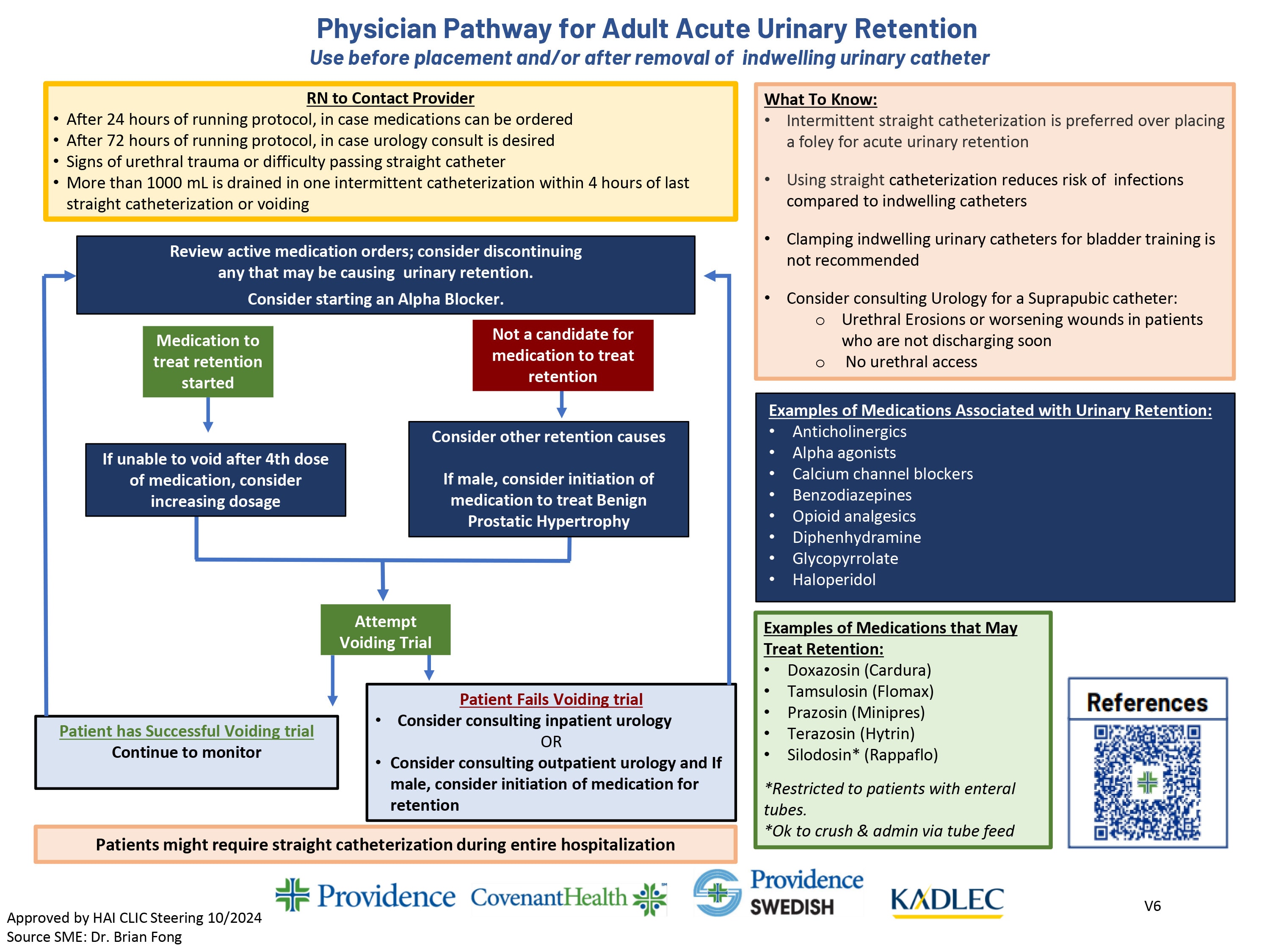
To print, view PDF: Physician Pathway for Adult Acute Urinary Retention
Key prevention strategies for both include avoiding unnecessary use and using nurse-driven protocols to remove catheters based on clinical guidelines where indicated (see attached Adult Acute Urinary Retention Pathway notes for physicians). Additionally, alternatives to indwelling urinary catheters should be considered. Other strategies for CAUTI and CLABSI reduction include hand hygiene (before and after patient contact or manipulating the device), using sterile technique, and proper maintenance. I ask for your partnership with our nurses and caregivers in avoiding unnecessary use and removing lines and catheters as soon as the clinical situation allows and it’s no longer needed.
2) Renewed focus on Length of Stay (LOS): Our teams have done tremendous work on length of stay for the past two years, resulting in an overall length of stay reduction of almost one entire day over the course of last year (a 13% reduction overall). But our patients still stay longer than expected when comparing similar diagnoses and dispositions (for example, patients who discharge home with a diagnosis of heart failure in particular DRGs or diagnosis related groups) to other hospitals… this is reflected in our O:E (observed to expected ratio).
We continue to work on ways to deliver safe, high-quality care to our patients that is also timely, ensuring that the right bed is available to the right patient at the right time. This means efficient use of resources including beds, labs, imaging and other ancillary services. 65-70% of our patients go home without home health or other requirements, so efforts to get these patients home safely as soon as clinically indicated are critical. Conversations early with patients and family about their expected length of stay and planning early for discharge help set the tone for the rest of our care teams.