Declining vaccination rates put U.S. measles-free status at risk
March 2026
At Providence, caregivers encourage anyone with questions or concerns to talk with a trusted health care provider. Staying informed and up to date on vaccinations helps protect not only ourselves, but our families, neighbors, and communities.
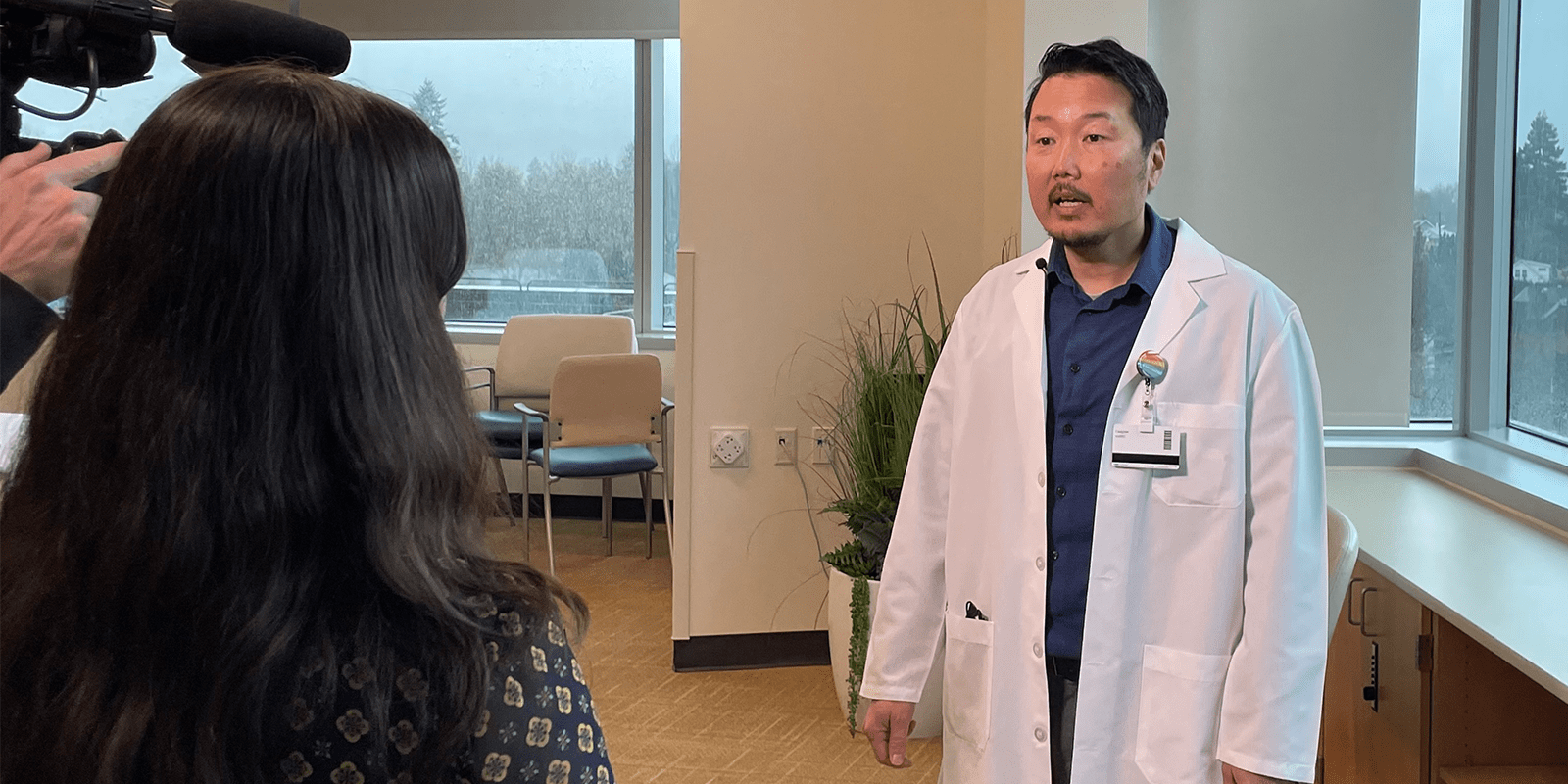
Justin Jin, M.D., medical director of infection disease virtual care and digital health for Providence Medical Group Oregon recently spoke with KATU about why vaccination remains the most effective way to stop the spread of measles.
Despite decades of evidence showing the measles, mumps and rubella (MMR) vaccine is safe and effective, vaccine hesitancy continues to be a barrier. Dr. Jin emphasizes that the risks of measles far outweigh the risks of vaccination.
“[Vaccination is] a lot less dangerous than getting a one-in-20 chance of developing pneumonia, a 20% chance of being hospitalized, or a one-in-1,000 chance of developing a brain infection,” he says.
Related:
- Schedule an appointment with Dr. Jin at Providence Portland Medical Center.
- See a story on the importance of quality clinical trials in rural communities.