CMO Message: August 2026
Excellence: Continuous improvement and the power of tiny gains
Today I’d like to focus on excellence, one of our five values (dignity, integrity, justice, compassion and excellence). Few if any of us are perfect, and I’m sure we all have at least one thing that we’d like to be better at. Healthcare is no stranger to this: from maintenance of certification to root cause analysis and ongoing accreditation, our profession, our patients and their families require us to continuously improve.
The only constant in life is change… but the good news is that consistent, incremental change pays off! While at times it feels endless, dedicating yourself to improving at something just 1.01% every day leads to 37 times that improvement over a year. Dedicating yourself and your teams to continuous improvement, consistency and the power of tiny gains helps us ensure we show up and deliver our best for our coworkers and patients each day.
For this month’s newsletter I need your help with opportunities for improvement from our Joint Commission Accreditation Survey and Annual Compliance training, as well as a few updates on Inpatient Pediatrics and Length of Stay.
1) The Joint Commission survey findings and opportunities. We recently hosted The Joint Commission (TJC) at St. Peter (PSPH) and the Department of Health (DOH) for survey activity. Some findings highlighted opportunities to strengthen consistency and improve the care experience for our patients.
a) Verbal orders – PSPH policy requires verbal orders to be signed within 48 hours. Chart review identified instances where verbal orders were not signed within the required timeframe.
b) Informed consent documentation – Surveyors identified consent forms that were missing required date and time elements and an instance in which required consent was not present in the medical record before treatment. Please ensure consent forms are fully completed and verify completion before procedures or treatment are performed in any area to include the main OR, procedural areas and bedside when required.
c) Restraints and seclusion – Violent restraints (addressing violent behavior that jeopardizes the immediate physical safety of the patient or others) require an order and a face to face (F2F) evaluation within one hour of initiation of restraint and must occur even if the patient is released from restraint within the hour.
d) Interpreter services and language access – Caregivers must use a qualified interpreter during care when the patient and/or companion indicate they have a preferred language other than English. Family, friends or bilingual caregivers or ad hoc interpreters are not considered qualified interpreters. Fluency assessments are available through interpretive services via approved vendors. Interpretive services use is best practice and protects patients, caregivers, physicians and APCs by ensuring patients can fully and consistently understand their care and participate in informed decision making. Interpreter use should be documented in the medical record. Available resources include:
· In-person Spanish interpreters Monday through Friday from 8 a.m. to 4 p.m.
· In-person Spanish interpreters on weekends from 8 a.m. to 12 p.m.
· Video Remote Interpreting (VRI)
· Telephonic interpreter services
· Spanish consent forms are available for use when appropriate
e) Pre-procedure assessments and history and physicals – History and physical examinations require an examination of the body system relevant to the planned procedure as required by Medical Staff rules and regulations. Pre-procedural assessments must be completed and signed before the procedure.
f) Inclusion of all required elements in operative and procedural reports – Key elements including procedure performed, key findings, findings and estimated blood loss must be included in operative and procedural reports; reports should be completed before transfer to the next site of care according to Medical Staff rules and regulations.
2) Length of Stay (LOS). Thanks to your hard work, July was a record month for LOS at PSPH, coming in at 5.02 days ALOS for PSPH (the lowest so far for 2026) and 3.67 days ALOS for PCH (only slightly higher than April at 3.52 days for PCH). We have also seen improvement in getting patients home closer to their GMLOS, with O:E to home at 0.97 and 0.84 for PSPH and PCH respectively.
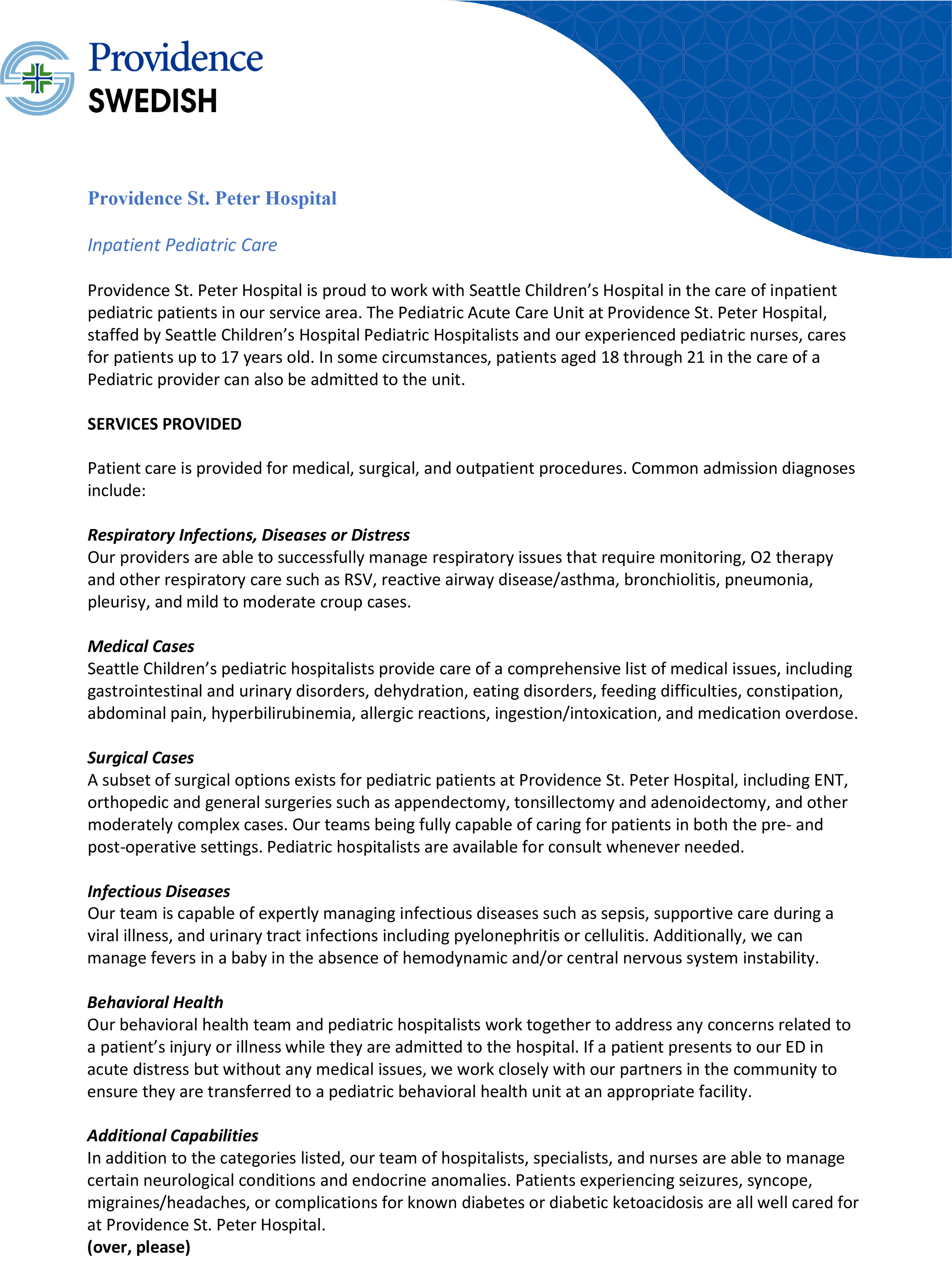
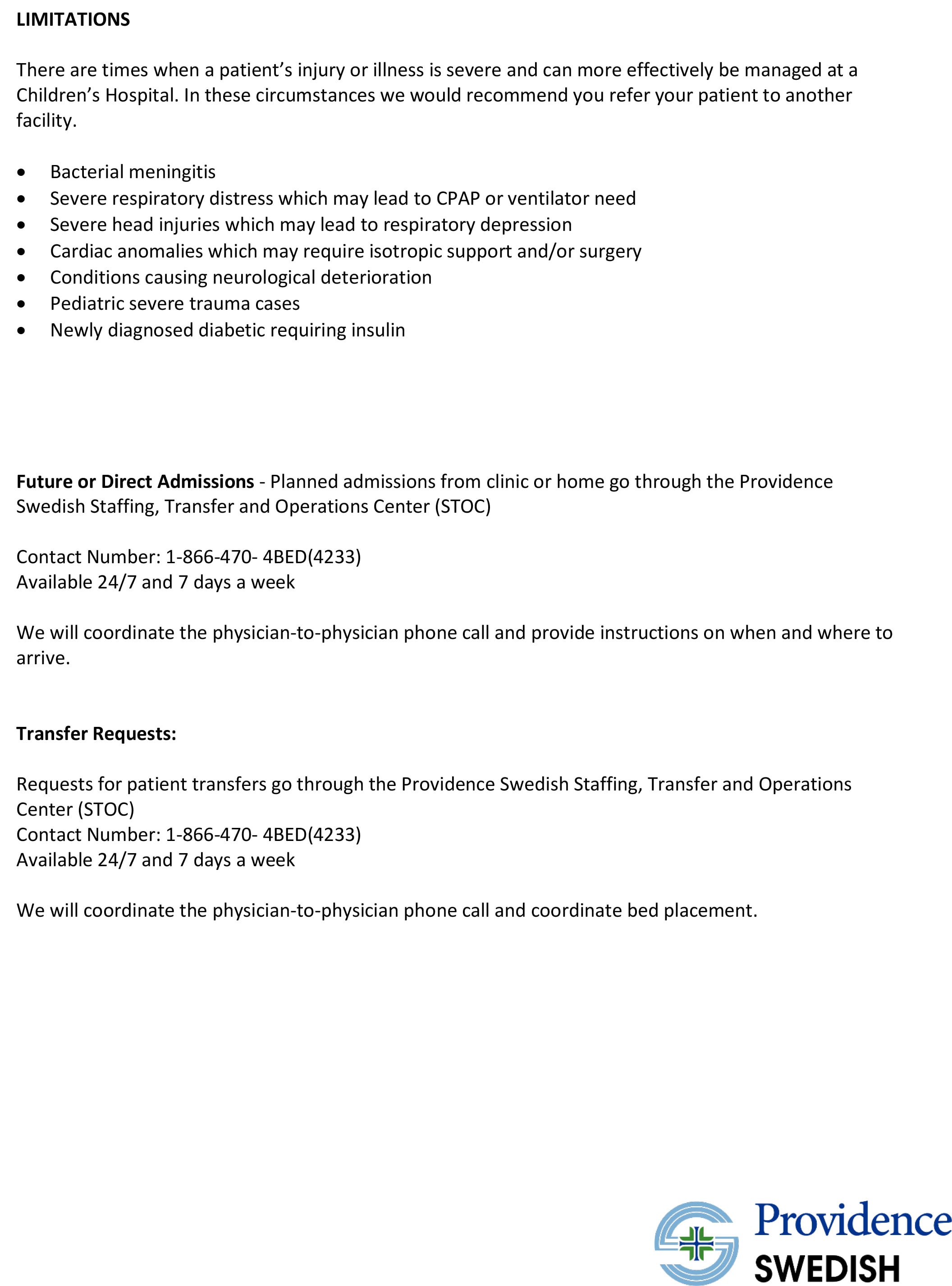
3) Inpatient Pediatrics update. We are pleased to continue our partnership with Seattle Children’s Hospital to provide pediatric inpatient care for children in our community and from surrounding areas. See document below for additional information.
4) Don’t forget annual compliance training is due Aug. 21! Thank you for your patience with our privilege attestation process. We are currently troubleshooting and will keep you updated on changes to the process or timeline.